
Since the late 19th century, the planets average surface temperature has increased by 1.18 degrees. With most of the warming occurring in the last 40 years, the need for action is becoming ever more important. At the time of writing, the COP26 conference is due to take place imminently, a real opportunity to produce global change. However, in this era, where true power only lies with the obscenely wealthy and the unelected ruling class, we have to wonder if their interests will truly align with the considerable change we need.
The phrases ‘renewable energy’, ‘reducing emissions’, ‘eat less meat’ and many more have been prominent in our climate change debates for over a decade. Although whether any substantial action has actually been taken is still up for discussion, these approaches are known to help limit our contribution to climate change. But does this crisis call for us to think outside the box? Here, I outline some innovative techniques that could have the potential to bring us closer to reaching a sustainable society.
Floating Solar
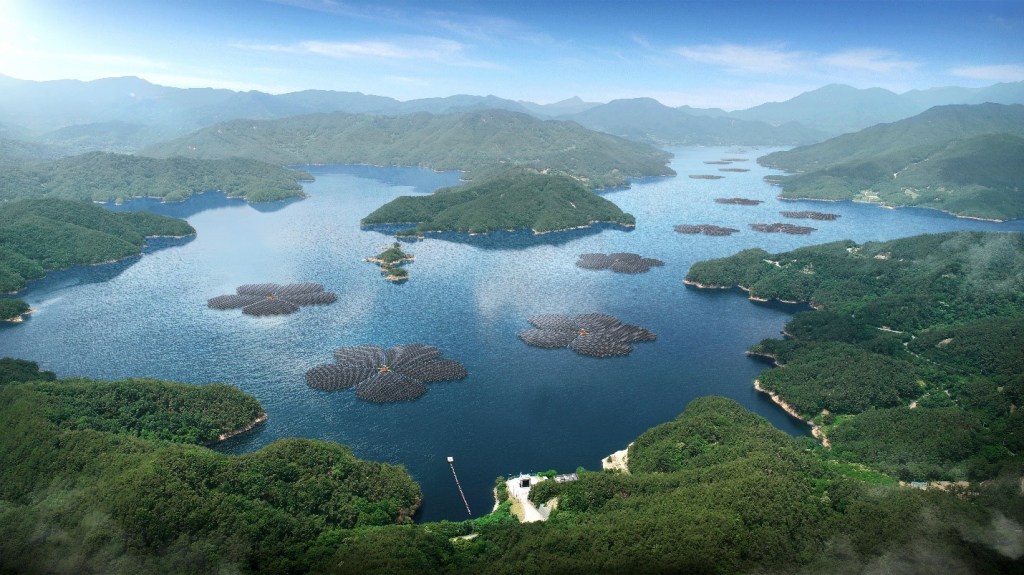
According to a 2020 IEA report, solar power is the cheapest source of electricity. One of the largest challenges associated with using solar technology in the UK, however, is land availability. So what can we do? Recently, attention has shifted to floating solar, which involves using pontoons to float a series of panels on the ocean or any large enough body of water. Aside from providing an alternative route around land acquisition, offshore solar panel placement can actually confer benefits of its own. Thanks to the cooling effect of the water beneath the panels, evidence has shown that the efficiency of these systems can be boosted by as much as 12.5%.
Korea has given the green light for the biggest photovoltaic power plant of its kind, meeting the annual power needs of 60,000 people. Built on a reservoir, it will produce 41 Megawatts of electricity per year and will not generate any greenhouse gases. A study based on Windermere Lake, located in Lake District, proved that a floating solar farm that reduces wind speed and solar radiation by 10% across this lake could locally offset a decade of warming from climate change.
Although further research needs to be done on its possible effects to marine life and its ecosystem, the promise of floating solar farms is immense and the global potential of this technology is only the beginning.
Giant water cannons
It is predicted that by 2100, areas that currently house 200 million people combined could fall permanently below the high tide line. As the planet warms, so do our oceans; when water heats up, it expands and so this sea-level rise can be attributed to warmer oceans simply occupying more space. This, combined with melting glaciers and ice sheets, is endangering over 570 coastal cities worldwide. While it may be argued that successfully combating this danger lies with tackling its root cause; the temperature rise, a more ‘abstract’ approach is being developed. Although the scientists themselves admit the idea is a bit far-fetched, they propose giant water cannons that will shoot seawater over ice sheets, refreeze, and consequently thicken the ice.
They concluded that if they could pump 62.5 to 87.5 gigatons per year, for 10 to 50 years, sea levels would only rise between 2cm to 5cm. Now the holes in this strategy are blatant, not to mention its hefty price tag of $500 billion. But it should serve as a proof of concept, rather than a tangible plan, especially when so many findings have surmised that even a strong reduction in greenhouse gases may not prevent the collapse of the West Antarctic Ice Sheet. While this may not be the ‘one’, I want to highlight that divergent thinking is crucial, if we are to face up to the challenges of climate change before the wave of consequences comes crashing down.
Plastic-eating enzymes
Now this is by far my favourite innovation and one that I feel represents a real chance at significant change. Plastic production has increased exponentially, from 2.3 million tons in 1950 to 448 million tons in 2015. Its pollution is extensive and long-lasting, with plastic particles found everywhere from the peaks of Mount Everest to the troughs of the Mariana Trench. Nearly every species of seabirds eats plastics and it is also known that people consume and breathe microplastic particles as well. Every year, approximately 8 million tons of plastic waste escapes into the ocean from coastal nations alone, so what’s the solution?
A combination of two enzymes that were discovered in a Japanese plastic-eating bacterium in 2016, has the capacity to turn the tide. The first, PETase, can degrade the hard crystalline surface of plastic bottles, the other, MHETase, doubles the breakdown speed of the products liberated by the first. This super-enzyme degrades plastic bottles six times faster than existing techniques. As PET plastics are hard to recycle, its production mainly relies on fossil fuel products. Therefore, commercial use of the enzyme will go a long way in not only breaking down our plastic waste but also in reducing our dependency on fossil fuels too.
Now I don’t want to entertain any misconceptions; these concepts are pointless if not used in combination with other climate change solutions, and it’s important to remember we have a long way to go. However, it will be interesting to see which technologies really take-off and any novel ideas that may materialize in the coming years. It only takes one person to think outside the box.
Editor: Adam Nightingale
Sources:
https://www.weforum.org/agenda/2021/04/floating-solar-farms-lakes-threatened-climate-change/
https://www.lexology.com/library/detail.aspx?g=8ba02028-99bf-4f10-8611-6be449f9e237
https://climate.nasa.gov/evidence/
https://www.inverse.com/article/57781-can-antarctic-snow-cannons-slow-sea-level-rise
https://www.udl.co.uk/insights/seven-creative-ways-to-combat-climate-change
https://oceanblueproject.org/plastic-eating-enzyme/
 Newscleus