
Based on the book ‘The conservation revolution – Radical ideas for saving nature beyond the Anthropocene’
‘One of the greatest violence’s of the neoliberal era was the closure of the political imagination. Even on the left, perhaps especially so, the sense became pervasive that there was no alternative to capitalism. Revolutionary possibility was generally confused with utopian-ism, the history of revolutions notwithstanding, and revolution was collapsed into a caricature of inevitable failure’
Neil Smith

The Anthropocene is a proposed concept claiming the Earth has moved into a novel geological epoch characterised by human domination of the planetary system. Our self-proclaimed supremacy of the world has left us crippled by the challenges of global warming and climate change. This globalisation of our species has resulted in an intricate association between our society and the environment, an association that has become detrimental to our conservation efforts.
Political ecology studies the relationships between political, economic, and social factors with environmental issues and changes. To my dismay, this topic was not supported over much of my undergraduate degree, and in some cases, its exploration resulted in the rejection of my work. Consequently, discovering ‘The conservation revolution – Radical ideas for saving nature beyond the Anthropocene’ was a relief. Written inside was a novel and eloquent argument that addressed our current political struggle to end the violence of human domination and exploitation of the natural world. It proposes that our ecological problems can be traced back to the rift between humans and nature – referred to as the alienation of nature – and that this very dichotomy is maintained by capitalism. The refreshing nature of this book lies in its suggestion that mainstream conservation is no longer pragmatic. It outlines capitalism as a root cause of our failing preservation efforts and that a critique of this economic system must be at the heart of any meaningful future conservation proposals. While I could never do the book justice in such a small article, I feel it is important to surmise its message in the hope that others may join this conservation revolution.
The unsustainability of capitalism
Before we explore the capitalistic influence that exists within conservation, I feel it’s important to first outline the paradox of capitalism. Extensive research has proven that capitalism is an inherently expansionary system driven by a demand for continual growth to overcome the cyclical stagnation that affects it. Consequently, it holds a contradiction, its continual advancement is reliant on the inherently finite nature of the material resources upon which its growth depends. So as resources become increasingly taxed by the quest for continual growth they become scarcer, causing costs to rise and profits to fall. It is this very process that is resulting in the depletion of natural resources and the accumulation of waste and pollution, all the while economic crisis forever looms on the horizon.
The poisoning of conservation by capitalism
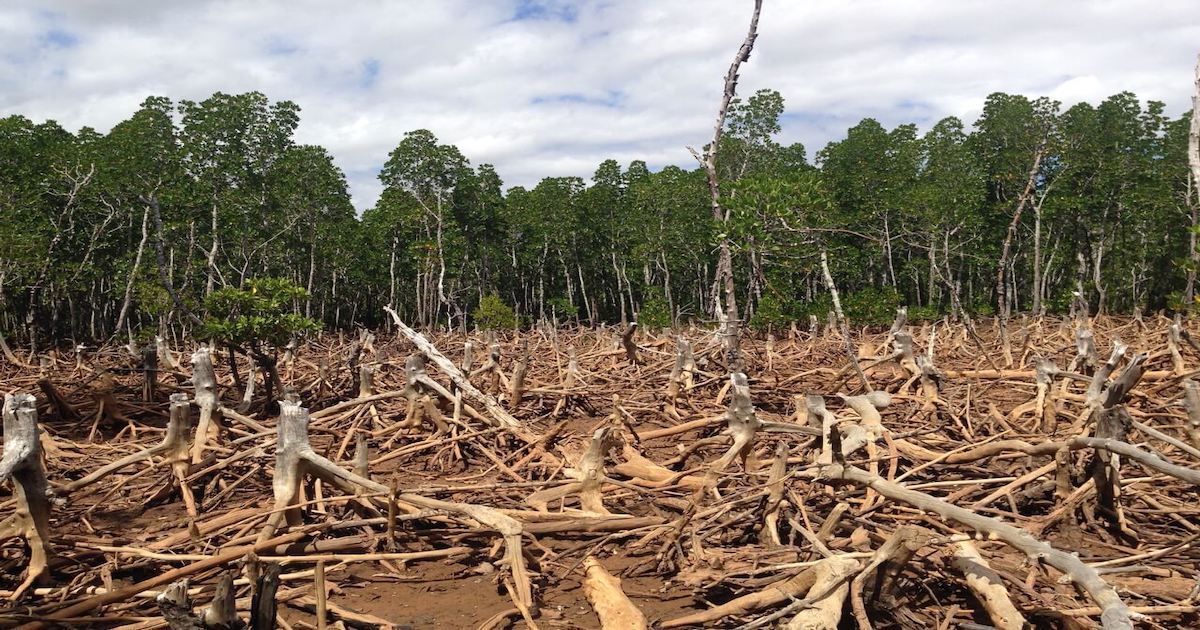

Only a crisis – actual or perceived – produces real change. While I had long hoped that our looming climate emergency would instigate a radical transformation, it has become clear to me that our unfair and unsustainable capitalist system, simply will not allow that. To make matters worse, contemporary conservation has merged with capitalism to create the unworkable movement we see today – one I’ll term ‘mainstream conservation’. Since the early 1990s, techniques such as ecotourism, environmental service payments, bioprospecting, and more, aim to harness the economic value of in situ resources to incentivise their preservation. As a result, global biodiversity conservation priorities have become governed by the economic value of biodiversity and its assumed contribution to human welfare. Essentially, conservation turned from being a movement that would try to reign in or counterbalance capitalism’s destruction of nature, to a force that actually fosters capitalist growth in its own right. A statement by Walmart’s CEO Rob Walton contends that there ‘is a direct connection between international conservation and America’s economic and national security interests.’ It is quotes such as this that support the claim that capitalist conservation has now become ‘mainstream’
The environment and its containing biodiversity have become economically valued, triggering intense alienation, to the extent that conservation is established as an asset class within global financial markets, just like any other company/corporation. The problems arise in the inherently unsustainable nature of capitalism, as previously outlined. At present, mainstream conservation is fundamentally concerned with harnessing increased economic growth itself as the basis for the maintenance of our protected areas and conservation activities. Yet the vast majority of this growth depends on extractive and environmentally destructive industries that increase pressure on those same protected resources that they are now expected to finance. This fictitious ‘conservation via financialisation’ is deeply and dangerously contradictory – it simply has to change.
We know tourism is one of the largest capitalist industries in the world and consequently ecotourism is simply an extension of this capitalist poisoning we see in our world. This ‘conservation effort’ is both indirectly and directly responsible for the destruction of the environment, so can never be the great saviour of nature that it claims to be. While its benefits will not be disputed, it simply isn’t a sustainable option as it relies on expansion to be economically viable. As nature reserves become more popular, more tourists appear, more facilities are needed, more land is needed, and more emissions are made – it’s just absurdist. It has also resulted in the long-term engagement of nature becoming an elite privilege rather than a democratic possibility. Visiting or owning ‘pristine’ nature has long been an elite activity and has been used as an escape from confronting the destructive reality of capitalism on our environment. So when ‘conservation’ is flying around in climate-changing aeroplanes in order to contribute to conservation through ecotourism, who is really benefiting? The elite that profit from our capitalistic system. Who loses? Everyone else and the world we live in.
Corruption and Poverty

This interlinking of capitalism and conservation has resulted in corruption. Many of our conservation initiatives have been shown to you through the lens of structural capitalist power, which fails to mention that different actors have different roles and responsibilities within our conservation efforts. Let me make that clear. On one side of our ‘actor’ scale, we have local residents who often live in or with biodiversity and rely on the land for subsistence. This group is often poor and contributes the least to global problems of biodiversity and YET most conservation efforts are targeted at their livelihoods in order to meet biodiversity targets. On the other end, we have the global upper class, that is politically and economically at the helm of the global capitalist system. These elites that own multiple properties, large estates, and reserves are at the helm of the system that keeps intense pressure on biodiversity, and YET are considered untouchable or even championing conservation through their large donations to conservation causes such as NGOs. Mainstream conservation no longer holds actors to their differential responsibilities and accountabilities, instead suggesting that all humans are equally to blame, making it hard to accurately direct conservation efforts.
This corruption extends into many conservation groups such as WWF, CI, TNC, and more. These organisations often collude with actors in the upper class, while directly targeting poorer groups with livelihood restrictions – sometimes just so those in the upper class can buy nice biodiversity-rich properties. It is these livelihood restrictions (timber, food and land restrictions, trade regulation, and in some instances, complete displacement to make way for protected areas) that results in the dramatic poverty that persists alongside protected areas. The elite upper class put pressure on protected resources by people with often few other options, all the while appearing to be part of the climate change battle. Are the climate contributions of a community in sub-Saharan Africa more in need of conservation efforts than the expansion of factory farms that are run by ‘protected’ capitalistic corporations?
New forms of capitalist conservation claim to address this problem of poverty with the promise of ‘development’ that will enhance the health and well-being of both human and nonhuman nature. But this is illusory when the very development they are talking about is capitalist development, which tends to exacerbate the very inequality – and hence often the poverty – it seeks to redress. Numerous bodies of research steeped in political ecology illustrate that instead of solving poverty, capitalist development has in fact long produced, and continues to produce, poverty, exclusion, marginalisation, and inequality. It creates systemic inequalities by dispossessing some to allow others and the system to accumulate. So those in poverty are not poor because they can’t produce meaningful lives but because they are the losers in a broader political economic struggle based on accumulation by dispossession. This is why we must move beyond this crisis-prone and socially deplorable system.
Conclusion
Now this is obviously a biased review and should be taken that way. Of course, there are many more intricacies to conservation than could ever be stated in such a short review, yet this underlying association between conservation and capitalism is undeniably damaging. This post will be part 1 of 2 in which the latter will state how we can move beyond this relationship and formulate a more sustainable approach for the future. This review has been written with the hope that readers will start to question mainstream conservation and join what can only be described as a conservation revolution.
Fancy Reading the Book?

 Newscleus