
“The wealth of nature does not lie in its ability to accumulate and privatize capital; it lies in the manifold ways that it enables humans to live. Capitalism makes nature ‘visible’ to us using money so it appears on a spreadsheet and how much it’s worth to humans as investors. Living with nature means that it is visible by definition.”
— Robert Fletcher
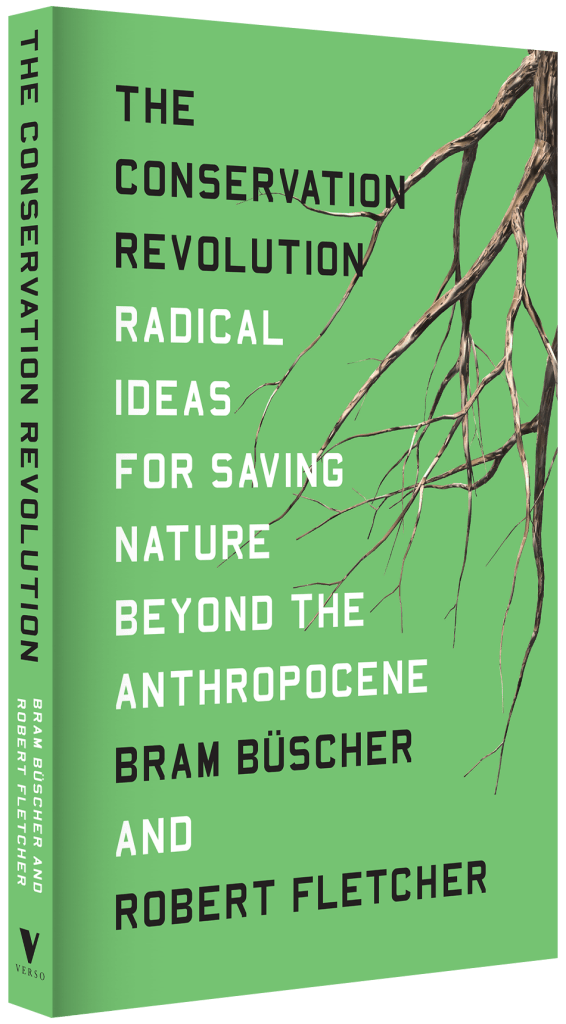
Well, here we are again. This is part 2 of my article based on the book ‘The conservation revolution – Radical ideas for saving nature beyond the Anthropocene’. While the previous post illustrated the problems with mainstream conservation, I aim to address here the radical changes that must be made to our society and minds.
Moving
on
I need to clarify a few things. The era we live in is one where the magnitude of change to our environment is virtually incomprehensible. Before we even contemplate a solution, we must take the Anthropocene back down to Earth – so to speak – so that we can discuss conservation in its rightful proportions, rather than under the unbearable weight of ‘climate change’ and ‘global warming’. The term ‘Anthropocene’ is deeply unsatisfying. It treats humanity as a single entity. It obscures and depoliticises profound differences between (groups of) people with vastly different impacts and claims. A better term then, would be the ‘Capitalocene’. The pervasive human influence over nonhuman systems has been centrally produced by the globalisation of capitalist production over the past 500 years, not by some general ‘anthrops’. So from here on in, I shall refer to our current geological era this way.
I also believe it pertinent to say that I have no magic bullet. A resolution to our global problems is unlikely to come from a single book or the mind of one biology undergraduate. Instead, this article calls for further development of radical proposals that can challenge our conservation problems beyond the ‘Capitalocene’. A note must also be made here to readers that believe extreme ideas and proposals are fruitless. Going against the capitalistic grain always invites the same response, namely that this thinking is ‘unrealistic, fanciful or simply incorrect – that it will never work because it is too radical.’ But that is exactly the point. It should be unrealistic if realism is capitalist realism. Surely what is truly radical is to continue down a status quo path knowing it will lead to disaster for most of the earth’s inhabitants. A capitalist political economy hell-bent on continuing destructive ‘business as usual’ at all cost – is this not radical?
So how do we tackle this capitalist giant? Even experts cannot agree. Some claim that the complexity of our social and economic system means that power is scattered and complex and so our resistance to it must follow the same path. However, it’s also argued that the radical left now largely operates outside of any institutional or organised oppositional channels and consequently cannot challenge the plutocratic capitalist class unless they find some way to organise their efforts across different levels of governance. In my opinion (so should be taken with a pinch of salt), we need to form some sort of coalition that would focus on gaining power, not for money, but so we can hold powerful actors accountable for their actions and transform them from within. We need a seat at the global table, so this coalition can become increasingly influential in shaping global conservation policy. If we do not become more radical and politically astute, more positive, equal, and sustainable, futures will be overwhelmed by the radical groundswell from populist right-wing movements that are on the rise.
Ok so let’s discuss. Below are 3 key aspects that I believe must change before any of us can picture a future that is anything but dystopian.
– Degrowth
– Protected Areas
– Mindset
Degrowth
Any future conservation effort has to be grounded in degrowth. I shall define this term here as a period of ‘planned economic contraction’ leading eventually to the type of steady state economy that has a sustainable level of aggregate. The only time global environmental impacts seemed to decrease was during the 2007 – 2008 global economic crisis and more recently the COVID-19 pandemic. Therefore, in order to achieve a more sustainable planetary trajectory, a strategy of managed degrowth of the economy is necessary. This sounds fanciful but researching around this area produced numerous policy proposals at a governmental level that could be implemented: resource and CO2 caps, extraction limits, work-sharing (reduced work hours), basic income and income caps, consumption and resource taxes with affordability safeguards, ethical banking, green investments, and cooperative firms. This degrowth activism could also occur at the grass-roots level: cycling, car-sharing, vegetarianism, agro-ecology, eco-villages, solidarity economy, as well as, decentralised renewable energy cooperatives.
You would be right to point out, how could this work in a capitalist economy that can only grow or collapse? Essentially we are looking at such a radical change that the resulting system will no longer be identifiable as capitalism. If we know that conservation is tied to the necessary growth of capitalism then, degrowth in its more radical form, will have profound consequences for conservation. In addition to the proposals previously outlined, we have to try and move on to a society that can conceptualise ‘alternative economic spaces’ that are not based on the logic of capital and economic growth but on those of equality and radical ecological democracy. While I know this is hard to visualise, it is essential to conceptualise otherwise we will never move forward to create a sustainable future for the planet. It is this change in human understanding that would allow us to move on from the ‘Capitalocene’, to a politics where taking responsibility for nature is combined with taking responsibility for democracy. It will become the human democratic responsibility to save the world.
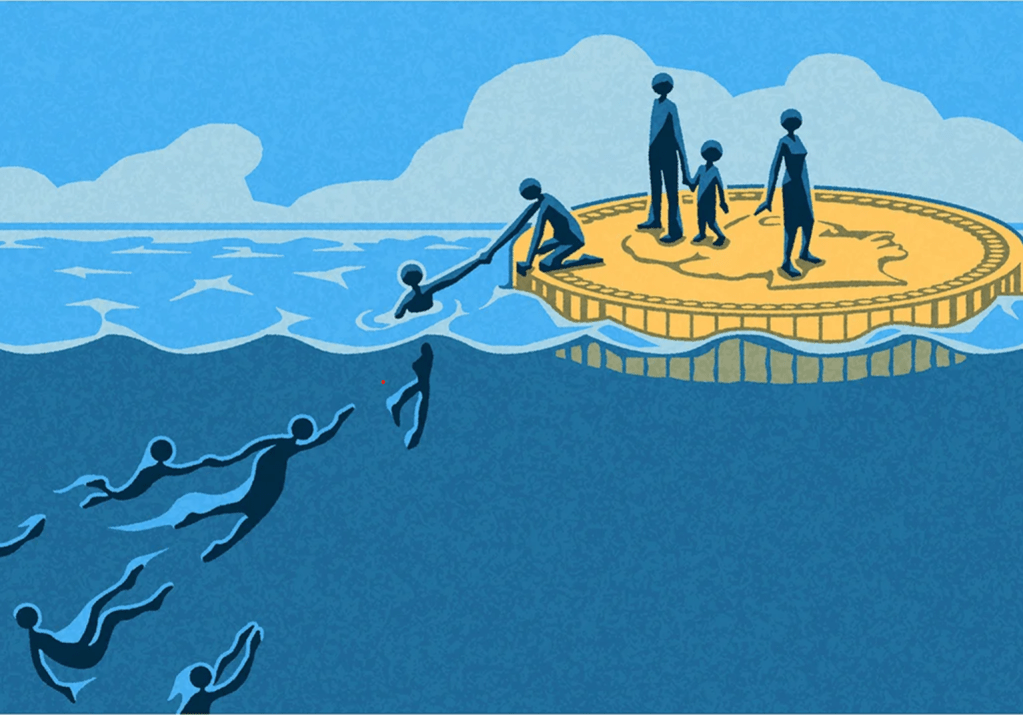
If we are to enter a post-capitalist world, revenue can no longer be generated through economic acceleration. Therefore, we would seek to produce additional revenue by redistributing wealth. This does not mean getting extractives to redirect a portion of their profits into conservation efforts to offset their ecological damage, as capitalist conservation seeks to do. Instead, we need to redistribute the wealth that’s available. Now this doesn’t need to be grounded in monetary valuation but in an ethic of reciprocity, care, and gifting that will be supported by the pooling of resources that are available to everyone. What is clear is that historic reparations are in order. Local communities that have been dispossessed or displaced by conservation, should receive their land back or at very least get co-ownership/co-management over it.

‘Oh but what about protected areas?’
It is consistently suggested that we can tackle capitalist imperatives of growth and consumerism through protected areas or rewilding. While the benefits of these strategies cannot be understated, it would be naïve to rely on them. Remember that our root problem is the uncontrolled economic growth and consumerism of capitalism; cordoning off portions of the planet does nothing to address this. While it may reduce the spread of a capitalist economy in some places, its growth imperative must continually intensify exploitation of the remaining available space – inevitably affecting protected areas due to the spill-over effects of this overdevelopment. Really the goal of a protected areas should not be to protect nature from humans, but to promote nature for, to, and by humans. At the moment these ‘protected’ areas are marketed on the basis of capital accumulation and hence are exploited via ecotourism and so forth. Instead, we should label them ‘promoted’ areas where humans are conceptualised as welcome visitors, dwellers, or travellers rather than temporary alien invaders upon a nonhuman landscape. Even the shift from ‘protected’ to ‘promoted’ changes the negative lens to one more positive and democratic. Under this idea, yes we will still see debate about which activities are permissible in ‘promoted’ areas – this is necessary for sustainability. But crucially these activities will not be seen as opposites or trade-offs but the logical extension of a broader mind-set that recognises the need for the promotion of conviviality between humans and nature. We must build a system that does not work to negate our damage, but one that sustainably exists alongside nature.
Conservation Basic Income
Within these promoted areas, a conservation basic income should be awarded to individual community members living there which allows them to lead a (locally defined) decent life. This is the conservation equivalent of a basic income grant that would sustain biodiversity-friendly livelihood pursuits without having to compete within a ruthless global marketplace in ways that would undermine the sustainability to which these pursuits aim. To ensure there is enough funds available for this scheme, governments should be lobbied to implement a conservation variant of the ‘robin hood’ tax.

NGOs
Additionally, NGOs should only work with companies if they pledge to move towards a different economic model beyond capitalist accumulation and GDP based growth. I understand that this again is hard to imagine, but even corporations and their CEOs should and do realise that their future, as well as that of their children, depends on a healthy planet. If their main goal is maximum income instead of maximum (or even minimum) benefit for nature, then clearly their priorities are twisted and are not deserving of any support.

Changing our ‘natural’ mind-sets
While this has less relevance in the political sphere, it could be the most important. Human obsession with ‘baselines’ and ‘thresholds’ has become damaging, using them to establish certain desired ‘natural’ states of plant and animal species. For many conservationists restoration to a pre-human baseline is seen as an ethical duty. We broke it; therefore we must fix. Baselines thus typically don’t just act as a scientific before to compare to an after. They become the good, the goal, the one correct state. But this obsession is incredibly vexing as it is essentially impossible to achieve. Every ecosystem, from the deepest heart of the largest national park to the weeds growing in your garden, has been touched by humans. So the idea that nature before capitalist development was somehow purer, more pristine, even ‘Edenic’, indicates that any form of human-induced change renders nature ‘impure’ or ‘spoiled’. If we were to take this logic, it would mean that any conservation effort within the Capitalocene would be pointless – so our baseline obsession is clearly unhealthy.
We must also discuss the ‘value’ of nature. Should nature be appreciated for its inherent ‘existence value’ or rather for its utility to humans. We see value as ‘assigned worth’, which is a politically constructed process subject to power, context and interests. Hence if we see ‘value’ only within one set of power relations, capitalism, we get to the fundamental problems with capitalistic conservation. After all, value under capitalism should always be ‘in motion’, seeking more value in an endless process of accumulation, development and intensification. Therefore, we need to reclaim the notion of value away from capital, to the embedded value of nature. Specifically, we need to move away from the spectacle of nature, and instead focus on ‘everyday nature’ in all its splendour and mundaneness.
We need to also revaluate the idea that conservation is about saving nonhuman nature. Humans are nature. The fact that we have put boundaries between human and nonhuman nature inherently tells us that we are attempting to protect ourselves for ourselves. Although we require a celebration of human and nonhuman nature equally, we cannot homogenise all forms of life otherwise humans will be made no more liable for the effect of their occupancy of the ecosystem than any other species. What needs to be established is a ‘post human’ perspective that would assert humans (both as a species and as individuals) as exceptional and unique; but that all other species and organisms, in their own way, are special and unique as well. By decentring the human and insisting on the unique nature possessed by the myriad forms of life, we can then highlight those characteristics – unique to humans – that facilitated the devastation that we have wrought on the planet. This has to be a central thought in future conservation – humans have a responsibility to consider the needs and rights of nonhumans who cannot actually participate in democratic deliberations, despite being equivalent subjects.
And I guess that’s it. I understand that it may seem like no real proposals have been put forward. They may seem wooly, abstract, and far off. That’s because they are. The world we live in does not accommodate change, so any idea that bends from the norm feels unachievable. We simply cannot allow this belief to spread through the masses. We must realise our potential together, we must realise our potential in the conservation revolution.
 Newscleus