
“If we fail to identify and address greenwashing, we allow ourselves false confidence that we are already addressing the causes and treating the symptoms of the climate crisis.”
— Emma Howard Boyd, Chair of the Environment Agency
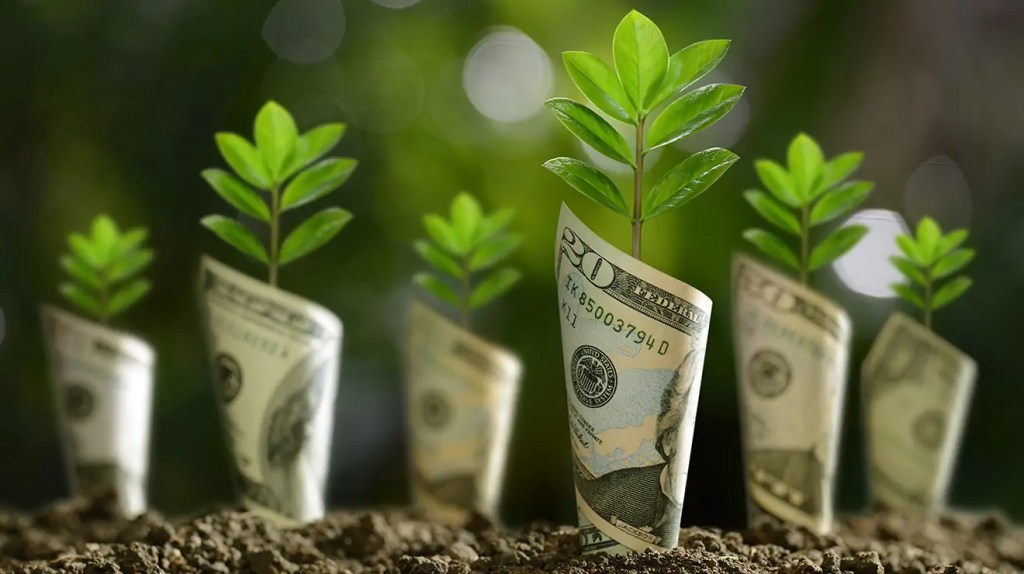
Trust. It fills our lives. A truly primal emotion that builds and sustains relationships, from your parents to your friends. But the intimacy of this emotion creates vulnerability. Presently, its abuse is playing on the climate anxiety of the world’s population, calling upon people to trust in corporations and governments to fix our climate catastrophe.
But it is manipulation for money, nothing more. Tackling our environmental issues requires political and economic reform. Calls upon governments and corporations to understand and acknowledge their ecological responsibility has not led to change, but to corruption. Enter Greenwashing.
What is Greenwashing?
In 1999 the term was added to the Concise Oxford English Dictionary, which defines it as: “Disinformation disseminated by an organization so as to present an environmentally responsible public image. Scholars have argued that greenwashing only considers environmental issues, distinguishing it from Bluewashing, which stands for social issues. But other researchers do not agree, so understand that this term may have definitions beyond those expressed in this article. Within, I will use the term to describe environmental phenomena.
Businesses promote their environmental awareness in a multitude of ways, from eco-labels to industry pledges. But our world is so intertwined and upheld by systemic corruption that we must ask when are these symbols wasteful corporate spin, and when do they signal genuine environmental improvements? Numerous banks are hiding their dangerous relationship with the fossil fuel industry through a campaign of misleading and contradictory corporate advertising. Why? Because companies are not required by law to publish environmental policy statements or verify that these statements are true using independent third parties. It then becomes very challenging for stakeholders and the public to know when a published commitment to a policy translates into actual policy implementation. This shroud of uncertainty deteriorates any relationship that can hope to be formed between those in power and those that keep them there.
`



What’s driving intentional environmental deceit?
The term ‘greenwashing’ has been around for almost 40 years, first coined in a 1986 essay by Jay Westerveld who noticed an irony in an expanding hotel’s request to pick up their towels to protect the environment. Environmental impact has never really been on the radar of many corporations and will still remain absent in many. But the clear aggravation of environmental pollution and the increasing pressure laid on companies’ doorstep from investors, consumers, and governments has set a change in motion. Environmental awareness has grown in society, and consumers especially, are eager for environmentally sustainable products. Research suggests that 66% of global consumers are willing to pay more for environmentally friendly products – although this has been contested. But what is undeniable, is an increase in the green market has been followed by the phenomenon of greenwashing
The watchful eye of the world has pressurised environmentally destructive corporations, not into change, but deception. Greenwashing has been allowed to proliferate and its existence go unchallenged, majorly due to lax and uncertain regulations surrounding it. Terms such as ‘green’ and ‘all-natural’ are contentious and vague so regulations face uncertainty. On top of this, no government currently mandates corporate disclosure of environmental practices (with some exceptions). I think the saddest part, is this transition has occurred through no moral acceptance, through no understanding of the dangers that we face, but instead in the name of increased profits and reputation. This is why it rests heavily on the shoulders of activists, NGOs, and the media to act as informal monitors of greenwashing.
A quick side note involving a study published last year – National Narcissism is one of a myriad of forms of collective narcissism where an individual or group of people hold an inflated, often defensive, view of their nation, believing it to be superior and deserving of special treatment. A study, containing 2231 participants, demonstrated that individuals high in national narcissism were less likely to support actual pro-environmental actions, yet more likely to support greenwashing campaigns (although not when they would incur financial costs).
Thus, greenwashing may be used as a political strategy. Interestingly national narcissism, and therefore greenwashing, is highly correlated with right-wing political orientation. Take that as you will. But it may satisfy voters’ deep-seated psychological needs, including identity needs, and thus might not be so readily condemned. It is then reasonable to assume that any readiness to support greenwashing – instead of actual pro-environmental policies which require individual and group level sacrifice – is partly driven by the need for national recognition, characteristic of national narcissism.
Forms of Greenwashing
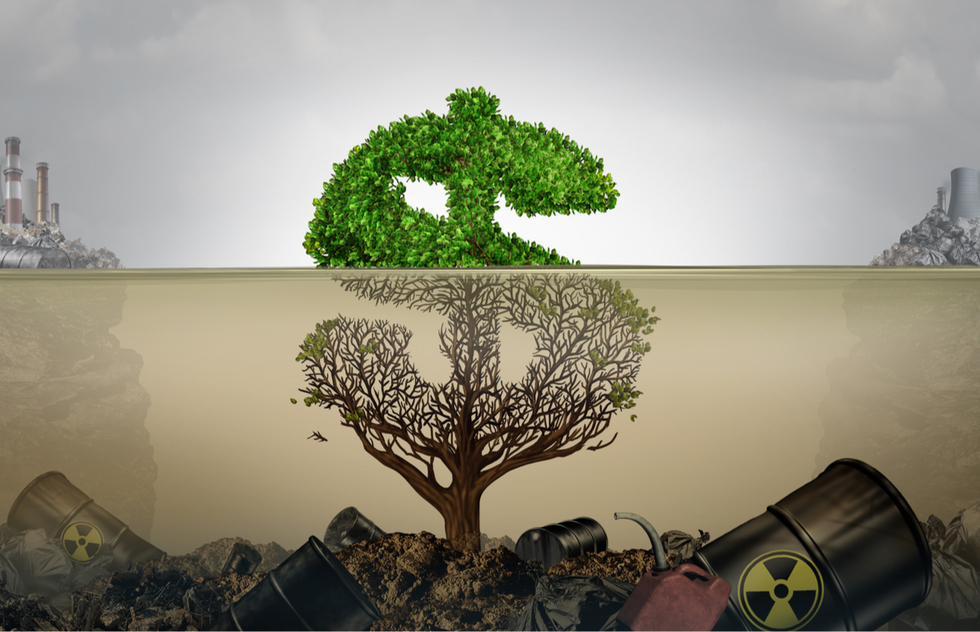
Claims made by companies can be entirely false, omit important information that may help evaluate the claim’s sincerity, and/or employ purposefully vague and ambiguous terms. They may selectively disclose information or be decoupled from any actual action, instead being ‘symbolic,’ to maintain corporate legitimacy. It would be impossible to outline all forms of greenwashing in-depth for such a short article, so let’s wrap them up into 7 deadly sins.
TerraChoicereported that 95% of products claiming to be green in Canada and the USA committed at least one of the “sins of greenwashing”, from the sin of the hidden trade-off to the sin of worshiping false labels.
The Sins of Greenwashing
The sin of the hidden trade-off
A claim that suggests a product is ‘green’ based on a narrow set of attributes without giving attention to other important environmental issues. Many energy, utility, and gasoline corporations will advertise their investment in new sources of green energy while failing to mention their endless walk upon a path of environmental devastation as they explore new oil.
The sin of the lesser of two evils
Perhaps one of the more subtle sins. A claim may be true in the product category, but distracts the consumer from the greater environmental impacts of the category as a whole. Palm oil corporations argue for their sustainability as it they produce a third more oil, with fewer pesticides and fertilizers, than any other oil crop. This argument is used to justify and excuse the ecocide, deforestation, and human rights abuses associated with ‘sustainable’ palm oil.
The sin of vagueness
Claims that are poorly defined or too broad, resulting in their real meaning being misunderstood. For example ‘All-natural’ could be used to describe arsenic, mercury, and formaldehyde, but they are poisonous and certainly aren’t ‘green’ But even here I fall at the hurdle. ‘Green’, ‘Eco-conscious’, ‘Non-Toxic’, without elaboration they are meaningless
The sin of worshipping false labels
This involves a product displaying a verification-like image that hasn’t been through a legitimate green certification process. Yet this issue is much more systemic. Many labels that have been legally recognized as ‘proof of sustainability,’ will sell their stamp for the right price, to products that hold no environmental ethos. In many cases, the label itself is nothing more than a marketing technique, employed for an advantage in the greed-driven economic climate we are trapped in.
The sin of irrelevance
This occurs when an environmental claim is truthful, yet holds no importance for consumers or may be entirely irrelevant. Perhaps the product boasts that it’s ‘CFC-free’, well it should be, considering they are banned by law.
The sin of no proof
A classic. Companies will make a claim that includes a percentage or statistic, with no reference or URL for more information
The sin of lying
Well…

But perhaps the most outrageous is the manipulation of human emotions, in the name of profit. Claims fabricating the ecological potential of certain industries, or those that contrive insecurity related to not ‘buying-in’ on an organisation’s practice, seize opportunity from instability and uncertainty. Profits over people. The greatest greenwashing sin of all time.

HSBC
Recently HSBC had a misleading advert banned and told any future campaigns must disclose the bank’s contribution to the climate crisis. The original advert highlighted that the bank was investing $1tn in climate-friendly initiatives like tree-planting and helping clients hit climate-friendly targets. Crucially, they omitted HSBC’s own contribution to emissions – they were continuing to significantly finance investments in businesses and industries that emitted notable levels of CO2 and other greenhouse gases. Even when they indicated that its current finance emissions – emissions related to the customers it financed – stood at about 65.3 million tonnes of carbon dioxide per year, this was misreported. This figure is solely based on oil and gas alone, understanding that they also finance other carbon-intensive industries such as power and utilities, construction, transport, and coal mining would result in a much higher valuation.
Energy Star
Remember I mentioned ‘false labels’? Energy star is a fundamental example of fictitious environmental certification. Since 1993, Energy Star ratings have been granted to products based on how efficiently they use energy. To attain the label, products must use 20-30% less energy than required by law. Yet a lack of oversight and regulation in the certification process meant that achieving an Energy Star rating was nothing more than a self-certification process by the manufacturer. It had become an efficient greenwashing tool. An investigation into the company in 2010, set up 4 fictitious companies and submitted twenty phony products for approval. Fifteen of the products were granted Energy Star status, including a “gas-powered alarm clock.” And guess what? It still exists as an international symbol today.
Is the age of Greenwashing over?
Greenwashing really originated from the rise of increasing environmental consciousness and poor environmental information through the 1980s and 1990s. While its existence cannot be rebuked, some suggest we may be seeing the collapse of its ‘traditional’ form.
Today the most egregious example can be easily exposed by anyone with a smartphone monitoring a company’s performance and exposing any undisclosed poor environmental conduct. Take the case study of ‘Green Mountain.’ This energy company boasted that for every watt of energy customers use, it buys an equal amount of power from wind and hydroelectric plants. In actuality, polluting combustion technologies were being disguised under the label of ‘green energy.’ A boycott ensued thanks to activists and NGOs access to consumers and the public through their use of Twitter, Facebook, YouTube campaign videos, and other internet-based platforms. As consumers, we the public, have become more interested in environmental issues; so are more powerful and can exert more influence and pressure on companies. While it may only be reputational damage we can inflict, we have outgrown our silence and responsibility must be taken.
Newspaper articles and scientific literature citations suggest the peak of greenwashing occurred from 2009 – 2012. I should disclose that I am sceptical of this. But note this, a company’s greenwashing activities in America are solely federally regulated by section 5 of the FTC act. Yet environmental charges brought about by this act totalled 37 from 1990 to 2000, zero from 2000 to 2009, and five in 2009. Although I believe this to be a testament to the difficulty in regulating greenwashing, as opposed to its incidence. Regardless, it is this very history of FTC charges that means companies likely perceive punishment for engaging in greenwashing practices as coming at very low risk.
It seems unlikely to me that a distributed force of informal monitors armed with smartphones and social media will stop ‘big business in its tracks. Really, I believe the advent of web 2.0 brings about a new age of greenwashing. Yes perhaps scrutiny has never been so global, but new forms of social media tools such as online corporate pages, blogs, wikis, and particularly social networks, open up Pandora’s box of misinformation that becomes ever more challenging to decode. Furthermore, the digital technology industry itself is unique. It has been born out of counter-culture ideologies and continues to present itself as being for the people and on the cutting edge of social movements. But shock, this isn’t true.
Take the examples of Amazon and Google

Amazon was the first signatory of The Climate Pledge that commits participants to achieve the Paris Climate Agreement goals by 2040, ten years ahead of the current timeline. They claim to have funded and implemented wind and solar technologies that powered 40% of their operation in 2019, which will be 80% by 2024 and 100% by 2030. At face value, these claims represent a significant commitment to environmental change, yet it is 2022 and Amazon has yet to confirm if they successfully moved 40% of their operations to renewable energy nor have they released any greenhouse gas emission status report. This completely undermines the legitimacy of their pledge
Google recently made the largest corporate purchase of renewable energy in history, in the pledge that their 15 data centers will be powered sustainably. Despite this, Google has made enormous donations to organizations and groups that deny climate change and actively lobby against climate legislation. In addition, the Competitive Enterprise Institute, the conservative policy group that was fundamental to Trump pulling out of the Paris Agreement, was heavily funded by Google. In 2018, the company funded 111 members of the U.S Congress who voted against climate legislation at least 90% of the time. Systemic lying ensures a continuation of distrust and deception between corporations, the government, and the public.

While the majority of the population lies in wait for the next false claim, corporate organisations and the government profit from the façade they produce. These actors must be held accountable for their actions and if the legislation doesn’t work, the buck is handed to us, the people, to procure change.
 Newscleus