
Each of us builds our own story of nature. It shapes our perception of the environment around us and its narratives guide our behaviours, relationships, and teachings. Yet the story has become monolithic through the dominant power of Western environmental knowledge. Recognition and respect for this perspective and its achievements are crucial, for it has enabled us to explore the inner workings of our environments and their relationships. Yet in its pursuit, Western science—with its reductionism, categorisation, separation, and pragmatism – has often overlooked the beauty, reciprocity, trust, sanctity, and poetry of the natural world.

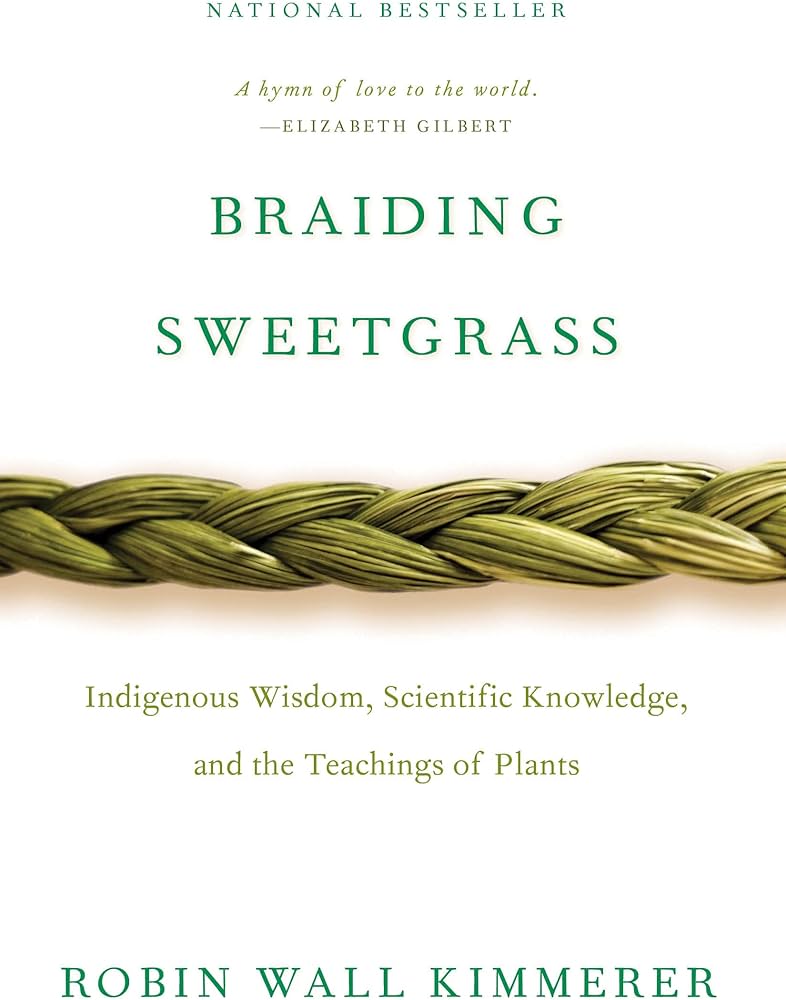
Braiding Sweetgrass by Robin Wall Kimmerer offers this with a refreshing alternative, providing a glimpse into our ecosystems through the lens of Indigenous Knowledge (IK). This perspective transcends anthropocentrism, reconnecting us with nature in ways Western science has often sidelined. Against the backdrop of escalating ecological crises—climate change, biodiversity loss, and ecosystem degradation—mainstream conservation remains heavily influenced by neoliberal ideologies, paradoxically relying on the very systems that have contributed to ecological degradation, positioning them as hopeful avenues for ecological redemption (Buscher and Fletcher, 2020). As these approaches increasingly feel incomplete, voices like Kimmerer’s, historically marginalised by colonial systems, are being recognised for their contributions to ecological understanding and sustainability.

“We hear so much about hope. Hope for what? For me it’s about helping people fall in love with the world again“
— Robin Wall Kimmerer
Yet truly understanding IK alongside Western science and society in an equitable manner has remained elusive. Braiding Sweetgrass seeks to bridge this gap by offering profound insights into Indigenous narratives and weaving them into a ‘story of healing’—one that reimagines our relationship with nature as a pathway to addressing the ecological crisis. And so this raises all kinds of questions. What can these alternative values teach us? Do they demand a relearning of, or even a departure from, western scientific approaches? And how might we begin to understand a different way of creating environmental knowledge in a world that often feels so detached from these perspectives? Robin Wall Kimmerer offers an invitation to explore these questions, presenting a unique perspective shaped by her dual identity as both a Western-trained botanist and a member of the Indigenous Potawatomi Nation. She encourages us to view nature with both reverence and curiosity, weaving together scientific rigor and a spirit of reciprocity. But to envision this alternative narrative within the context of modern society is a complex undertaking, layered with social, cultural, and political dimensions. And so although branded as a work of non-fiction, its educational value and applicability require an exploration, particularly in reference to one’s own entanglement within Western systems of academic validation. Therefore, this essay will critically analyse Braiding Sweetgrass, to delve into how Kimmerer’s positioning of Indigenous Knowledge intersects with contemporary understandings of nature, science, and society, and the structural shifts required to embrace this worldview.
Gift-giving vs Capitalism
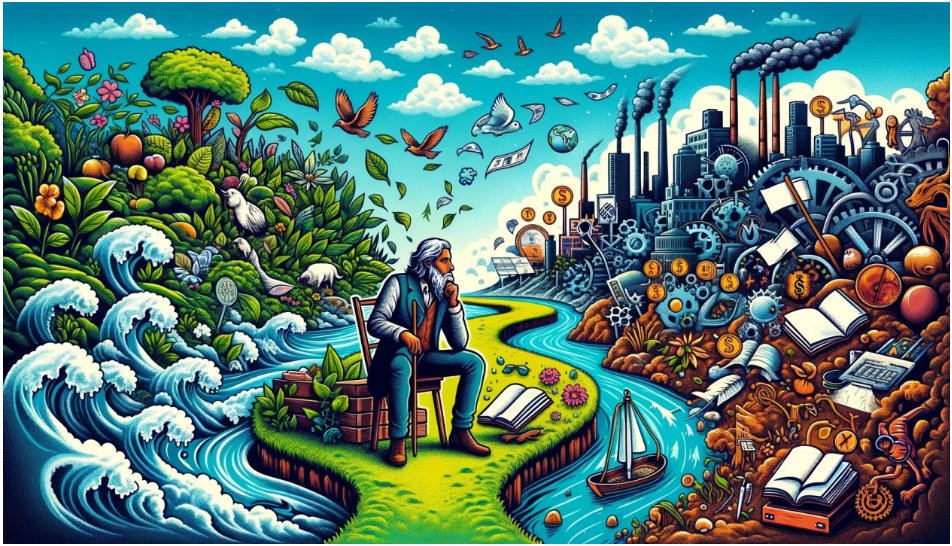
At the heart of Braiding Sweetgrass, Kimmerer emphasises nature’s intrinsic value. She illuminates its generosity and guidance, employing words like ‘gift’, ‘respect’, and ‘beauty’. From a perspective of her Indigenous wisdom, nature’s value is reciprocal (Kimmer, 2013), that the flora and fauna of the world offer gifts of nourishment, medicine, and wisdom on balanced living, so as to receive the same thoughtful treatment in return. By ‘…behaving “as if” the living world were a gift’ (p.31), Kimmerer attempts to introduce the concept of the Honourable Harvest, to take only what you need and no more. It is in these sentiments that Kimmerer first highlights the contrasting perspectives on nature between IK and Western society. The latter is rooted in neoliberal and capitalist ideologies, which inherently promote the commodification of nature and consequently enforce a cycle of continuous consumption (Buscher and Fletcher, 2020). Supermarkets overflow, waste accumulates, and everything—from natural resources to living beings—is reduced to raw materials for human expansion. To embrace Kimmerer’s worldview then, requires more than a shift in perspective; it necessitates a rejection of current Western society’s foundational ideologies. Furthermore, emotional engagement in the Honourable Harvest demands a certain position of privilege, as survival within a capitalist world often forces individuals to conform to systems that marginalise environmental mindfulness (Eisenstein, 2018).
However, it would be reductive to frame these ideas as merely another ‘cultural perspective’ on nature. As Kimmerer acknowledges, IK is deep-seated in her culture, heritage, and centuries of tradition; regarding nature in this way ‘…is a vehicle for belonging – to a family, to a people, and to the land’ (p.37). This valuation of nature is a consequence of, at its essence, an alternative form of knowledge production. Value is contained holistically, through generations of living, passed down in oral tradition. In the indigenous language of Potawatomi, animacy is granted to the natural world. Every mountain, river, tree, and place is imbued with spirit by its very nature of being spoken. ‘Objects’ are not an ‘it’, but a ‘who’. Knowledge and practices like this are formed through their bond to land. Indigeneity is a birthright and so in Kimmerer’s words ‘No amount of time or caring …. Substitutes for soul-deep fusion with the land’ (p.213). This disparity, and above all, the exclusivity of IK, highlights how framing nature’s value in this way poses a potential challenge for the general reader. Rooted in objectivity, reproducibility, and universal ‘truth,’ Western science cannot place nature’s intrinsic value at its forefront in the same way IK does, making it hard to relate to. It is here that Kimmerer’s heritage and background becomes crucial to consider. While she does not suggest that embracing an alternative view of nature is simple, she risks oversimplifying the adoption of nature’s intrinsic value. For her, the ‘moral covenant of reciprocity’ feels self-evident— likely a reflection of her dual identity as both a Western-trained botanist and a member of the Potawatomi community. It fails to recognise the frustration felt by those holding alternative forms of knowledge that do not find this concept so intuitive and attainable, as to conceptualise a worldview so contrasting and excluding is ambitious. And yet, one could argue that the sublime experience of nature is precisely what inspired the birth of modern Western science. Alexander von Humboldt, often hailed as the ‘father of ecology,’ approached nature with a similar sense of beauty and poetic wonder. Reflecting on this connection, he wrote, ‘What speaks to the soul, escapes our measurements,’ revealing a spiritual appreciation of nature that resonates with the reverence often found in Indigenous worldviews (Wulf, 2015). By this logic, Kimmerer appears correct in asserting that key barriers to understanding Indigenous perspectives and valuing nature intrinsically are our societal embrace of neoliberal and capitalist frameworks. It is not that the beauty or intrinsic value of nature is beyond our grasp; rather, it is the limiting lens imposed by these economic frameworks that obscures it, normalising a perspective that prioritises exploitation and commodification over connection and reverence.


Changing the Narrative
For Kimmerer, Braiding Sweetgrass is not an attempt to legitimise IK in the eyes of Western science, it is ‘…a braid of stories meant to heal our relationship with the world.’ (p.x). It is this postulation that undercuts the majority of the book as she tries to creatively reimagine a world narrative that brings ‘…indigenous ways of knowing, scientific knowledge…together in service to what matters most.’ (p.x). This balance is vital to address as uneven power dynamics enable Western powers to appropriate IK, often repackaging it in academic papers or conservation strategies (Agrawal, 1995; Simpson, 2004; Sletto, 2005). Steeped in colonial legacies, it divorces IK from its origins and transforms it into a ‘resource’ for state or institutional benefit. Such practices reflect a narrow, almost dogmatic belief in science’s claim to universal truth, where knowledge is “discovered” and added to a singular, objective narrative. Kimmerer, much like Latour in his constructivist argument (Latour and Woolgar, 1986), urges us to step back and examine how knowledge systems are shaped by cultural and institutional contexts. She highlights that the parallels between scientific and IK are not inherently oppositional but rather different narratives through which we interpret and retell our understanding of the world. A perfect example is through the story of the ‘3 sisters’. Corn, Beans, and Squash have a symbiotic relationship, each supports the other in a deliberate partnership that enables all 3 to flourish. In Western science, we examine this relationship using terms like monocot, Rhizobium, and trellis, analysing their symbiosis through the exchange of nitrogen, amino acids, and sugars. But for the Potawatomi, this is a story of unity and reciprocity, in which on one snowy night these 3 sisters ‘…gave themselves to the people in a bundle of seeds so they might never go hungry again’ (p.131). Their harmonious relationship is a gift from the land, teaching that ‘only when standing together…does a whole emerge that transcends the individual.’ (p.140). Kimmerer suggests that the analogous nature of these narratives shows that learning from IK doesn’t require abandoning one’s current belief system. Instead, she calls for openness to expressing these alternative values through a complementary framework, one that moves beyond the ‘Intellectual monoculture of science.’ (p.140).
Stories like these reaffirm the Indigenous understanding of nature’s intrinsic value and the deep respect it commands. Narratives like this are core to the book and while not classified as an educational text, tries to position these retellings in the context of the modern classroom. Kimmerer, based in America, uses the Pledge of Allegiance as a core example. Usually recited at the start of each day, she posits the curious nature of ‘pledging loyalty to a political system’ (p.106); revealing to us instead the Native American address known as ‘The Words That Come Before All Else.’ (p.107). In short, each verse gives gratitude to the world around them, the water, trees, moon, and wind to name a few. Deeply rooted in the ancestral homelands of the Onondaga Nation, the transference of such a fervent address to nature’s reciprocity, will likely struggle to find resonance in mainstream Western education. While practical barriers such as determining who is entitled to teach this knowledge, reforming the U.S. education system, and the challenges posed by an incoming Trump administration warrant attention, I believe Kimmerer overlooks a deeper, more intimate question. To fully understand the inherent value of nature and truly embrace the spirit of gratitude, as Kimmerer suggests, a connection to the land is non-negotiable. Without the culture, tradition, and deep-rooted relationship to the land, how can these words truly resonate? In reality, nearly 80% of the U.S. population lives in cities (US Census Bureau, 2022), disconnected from the traditional idea of ‘nature’. Can a textbook teach someone how to feel nature’s reciprocity? Probably not. This might explain why Western scientific knowledge has dominated education—it doesn’t require emotion or trust, just objectivity and standardisation, a perfect match for textbooks. And so, while these stories are powerful, truly internalising the lessons they offer requires more than belief—it demands a fundamental reimagining of how we, in Western societies, relate to the land, within the context of our own education and cultural narratives.

Conservations missing piece?
In no sphere has IK gained such traction than that of conservation. This shift likely underscores the increasing recognition that any sustainable conservation technique will require a human coexistence with nature; nowhere is the coexistence so empirically obvious than in lands of indigenous stewardship (Fletcher et al., 2021). Kimmerer’s language and story-telling throughout the book does well to root conservation in meaning, not commodification. She takes the spotlight away from the specialist language of biodiversity-offsets, ecosystem services, and natural capital, instead giving character and soul to non-human objects framing it as more of a moral obligation than a task of survival.
And so for an audience outside the scientific circle, Kimmerer does incredibly well in reshaping the conservation conversation. But it’s here that the book seems to hit its ceiling. Published by Penguin as a work that feels almost fictional, Braiding Sweetgrass captivates the public in a moment of curiosity and wonder, weaving something that feels mythical. Yet, the power to shape mainstream conservation does not lie with the general public—perhaps even less so with the knowledge of Indigenous peoples. Maybe it should, and perhaps therein lies the transformative potential of the book. However, if we are to consider Kimmerer’s vision pragmatically, she struggles to bridge the divide with mainstream conservation and its scientific community.
For example, Kimmerer introduces us to John Pigeon, an indigenous ash basket maker in the state of Michigan who practices traditional techniques based on the Honourable Harvest. She illustrates that not only was this harvest ‘sustainable’, but this very practice maintained the ash forest, keeping the population healthy in a symbiotic relationship – ‘Their fates are linked.’ (p.149). Kimmerer uses case studies like this to provide empirical support for the inclusion of IK in conservation frameworks. However, she measures success not by the p-value, but by the depth of emotional kinship fostered between humans and the natural world. In contrast, Western conservation often prioritises ‘natural values’ over cultural ones (Lee, 2016). This narrow focus struggles to encompass the holistic principles central to IK, making their meaningful integration into conservation efforts a persistent challenge. Therefore, Kimmerer suggests that conservation should move beyond static goals like balance or pristineness, viewing these instead as a “moving target.”
Even so, Kimmerer acknowledges that achieving such an understanding requires years of close tending and nurturing of one’s immediate environment. For her, this connection was cultivated through the careful observation and care of the pond behind her garden. Only by engaging deeply with this space did she begin to grasp its intricacies and create “a home where all life beings can flourish” (p.97). Similarly, John Pigeon, who had lived his entire life among the Ash trees he harvested, demonstrates that while the conservation value of his methods can be quantified through Western scientific approaches, their true essence—rooted in emotional interconnectedness—is deeply personal. Kimmerer underscores that bridging these distinct forms of environmental knowledge is vital to creating sustainable conservation techniques, asserting that “Western science is the heads and hands, but IK is the heart, and we need all of them” (p.336). But who is equipped to bridge this divide? Access to land is profoundly unequal across the globe, and the erosion of local expertise and knowledge inheritance only exacerbates the issue (Selemani, 2020). Kimmerer even highlights this with the striking observation that only “nine fluent speakers” (p.50) remain of her Potawatomi language.
How can the profound intricacies of animacy and kinship—so central to Indigenous perspectives—be effectively integrated into modern conservation techniques when the transmission of this wisdom is so precarious? While Kimmerer advocates for an emotional and spiritual alignment of nature’s value with modern conservation approaches, the reliance on IK and land connection within her vision presents significant challenges for its application. Furthermore, modern conservation frameworks often treat IK as a supplementary “top-up” to Western scientific methods, limiting its potential to be fully realised. Governments, policymakers, and economists frequently fail to recognise the intellectual property of Indigenous communities (Danielsen et al., 2024), reducing IK to a mere add-on rather than a foundational component of conservation planning. This oversight not only diminishes the value of IK but also raises questions about its preservation as it becomes more entwined with Western frameworks.
Indigenous Knowledge in Flux
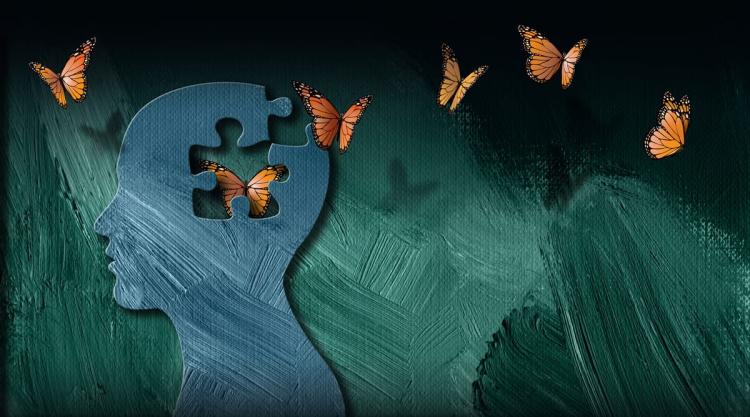
Braiding Sweetgrass was written in 2013 and Kimmerer writes as someone whose indigeneity and knowledge is unwavering. She focuses on key principles of her IK and how they can complement and enrich Western knowledge and its associated conservation frameworks. However, given that these collaborations are still evolving, the book doesn’t explore how these exchanges might transform IK itself. One could argue that IK is evolving into a hybrid concept, reshaped as it is increasingly redefined within Western structures (Anthias and Asher, 2024). Standardised definitions from the UN and CBD do little to address the diversity of IK, instead acting as gatekeepers; legitimising particular forms of knowledge production and requiring communities to reconfigure their identity and cultural practices in order to receive recognition within these Western legal, political, and environmental frameworks (De la Cadena, 2010; Coulthard, 2014; Tănăsescu, 2020). So much of the restructuring and reshaping of IK occurs under the ‘conservation guise’, through land-use management, biodiversity targets, and legal environmental regulation (Turnhout, 2018). So while Braiding Sweetgrass successfully hypothesises a balanced relationship between differing environmental knowledges, it does not fully consider how they may interact and reshape each other in the future as they become ever more intertwined.
Conclusion
While published as a work of non-fiction, the book’s deeply localised focus means it cannot—and arguably should not—be seen as an educational text in the conventional sense. While this review situates Braiding Sweetgrass within the intersections of IK and contemporary worldviews, I feel its true value lies in its creative speculation on the power of IK—a knowledge system often transmitted orally within specific communities, rarely accessible in written form. This rarity makes the book a powerful vehicle for raising awareness and captivating audiences, a testament to its bestselling status. Yet, a deeper analysis leaves more questions than answers. This sense of uncertainty is, perhaps, shaped by my own background and biases, but it underscores the challenge of understanding IK in a contemporary context. The fundamental principles of IK that Kimmerer recites —their stories, their myths—often feel elusive, leaving a lingering sense of distance. They resonate as narratives, rich in meaning but difficult to fully grasp, as though their essence lies just beyond reach.
This, I feel, is where Kimmerer’s unique position becomes central. Her dual background in Western science and Indigenous traditions grants her a perspective that allows her to weave these threads of knowledge into a cohesive worldview—a perspective not easily accessible to all. For me, the book’s underlying message is less about presenting a universal path forward and more about encouraging readers to reimagine their own stories. It highlights the deeply personal nature of environmental knowledge, suggesting that the worldview you construct—rooted in your own experiences and truths—is one you can believe in and become a part of.
Bibliography
Agrawal, A., 1995. Dismantling the divide between indigenous and scientific knowledge. Development and change, 26(3), pp.413-439.
Anthias, P. and Asher, K., 2024. Indigenous natures and the Anthropocene: Racial capitalism, violent materialities, and the colonial politics of representation. Antipode.
Buscher, B. and Fletcher, R., 2020. The conservation revolution: radical ideas for saving nature beyond the Anthropocene. Verso Books.
Eisenstein, C., 2018. Climate: A new story. North Atlantic Books.
Coulthard, G.S., 2014. Red skin, white masks: Rejecting the colonial politics of recognition. Minneapolis: Minnesota.
Danielsen, F., Ali, N., Andrianandrasana, H.T., Baquero, A., Basilius, U., de Araujo Lima Constantino, P., Despot-Belmonte, K., Frederiksen, P.O., Isaac, M., Jakobsen, P. and Klimmek, H., 2024. Involving citizens in monitoring the Kunming–Montreal Global Biodiversity Framework. Nature Sustainability, pp.1-10.
Tănăsescu, M., 2020. Rights of nature, legal personality, and indigenous philosophies. Transnational environmental law, 9(3), pp.429-453.
De la Cadena, M., 2010. Indigenous cosmopolitics in the Andes: Conceptual reflections beyond “politics”. Cultural anthropology, 25(2), pp.334-370.
Fletcher, M.S., Hamilton, R., Dressler, W. and Palmer, L., 2021. Indigenous knowledge and the shackles of wilderness. Proceedings of the National Academy of Sciences, 118(40), p.e2022218118.
Kimmerer, R.W., 2013. Braiding sweetgrass: Indigenous wisdom, scientific knowledge and the teachings of plants. Milkweed editions.
Latour, B., and Woolgar, S., 1986. Laboratory Life: The construction of scientific facts. Princeton University Press.
Lee, E., 2016. Protected areas, country and value: The nature–culture tyranny of the IUCN’s protected area guidelines for Indigenous Australians. Antipode, 48(2), pp.355-374.
Selemani, I.S., 2020. Indigenous knowledge and rangelands’ biodiversity conservation in Tanzania: success and failure. Biodiversity and conservation, 29(14), pp.3863-3876.
Simpson, L.R., 2004. Anticolonial strategies for the recovery and maintenance of Indigenous knowledge. American Indian Quarterly, pp.373-384.
Sletto, B.I., 2005. A swamp and its subjects: conservation politics, surveillance and resistance in Trinidad, the West Indies. Geoforum, 36(1), pp.77-93.
Turnhout, E., 2018. The politics of environmental knowledge. Conservation and Society, 16(3), pp.363-371.
US Census Bureau., 2022. Nation’s Urban and Rural Populations Shift Following 2020 Census, Census.gov. United States Census Bureau. Available at: https://www.census.gov/newsroom/press-releases/2022/urban-rural-populations.html.
Wulf, A., 2015. The invention of nature: the adventures of Alexander von Humboldt, the lost hero of science: Costa & Royal Society Prize Winner. Hachette UK, pp.79
 Newscleus